Unjudging Someone: How the Human Library Revived Storytelling for Diversity Week
When was the last time you listened to someone whose life journey was vastly different from your own, without feeling the urge to disagree, judge, or project your own story onto theirs?
Can you recall a moment when a grandparent sat you down and said, "Let me tell you a story"?
In many cultures across the globe, grandmothers serve as our most profound links to our roots, always ready with a warm hug, a comforting cup of tea, and an unforgettable tale. Do you remember how the room seemed to shrink and the outside world faded away as you stepped inside their lived experience? In those quiet, magical moments, distance evaporated, generations connected, and wisdom was passed down without a single textbook or lecture.
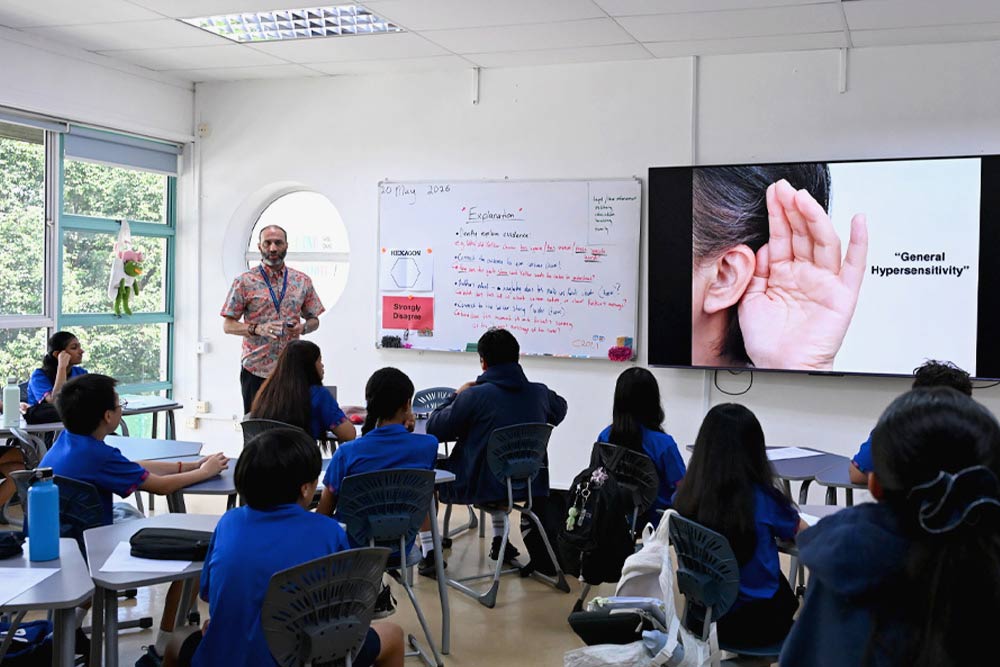
That safe, profound connection is precisely what we sought to recreate for our Year 7 to 9 students during Diversity Week 2026 at Chatsworth International School. As an English Language Acquisition (ELA) teacher, storytelling is far more than a classroom methodology for me; it is a lifelong passion and a vital personal philosophy. Whether volunteering with the National Library Board Singapore sharing books like The Colours of Us at Queenstown Library, or organising Human Library projects in my previous international teaching roles, I have witnessed firsthand how raw, personal stories bridge human divides that traditional instruction simply cannot reach.
Key Takeaway: When we give our school community a dedicated space to share their authentic realities, we unlock new ways to appreciate the human experience. Sometimes the most profound learning comes from the oldest teaching tool in human history: a lived experience shared out loud.
The Science Behind the Magic
Looking back at the vibrant, deeply moving conversations that filled our learning spaces, modern cognitive science helps explain why the rooms felt so charged with empathy and quiet awe. When we listen to a compelling narrative, a remarkable neurological process known as neural coupling occurs as the brain waves of the listener literally sync with those of the speaker.
Psychologists call this phenomenon Narrative Transportation. When our middle school students sat down with our human books, they became so emotionally integrated into the personal journeys being shared that their natural psychological defenses dropped completely. Crucially for an initiative like Diversity Week, storytelling accomplishes what abstract statistics, strict school policies, and formal lectures alone cannot: it reduces cognitive counter-arguing, giving listeners the safe mental space to absorb diverse perspectives without instinctual judgment or skepticism.
This ancient power of shared imagination resonates across world history, carrying deep roots from West African Griots preserving communal memory and Irish Seanchaí keeping folklore alive, to Indian Katha oral traditions shaping moral character. Centuries later, in our high-tech modern classrooms, we are simply reviving a timeless human practice that our brains are hardwired to enjoy and learn from.
From the TEDx Stage to the Human Library
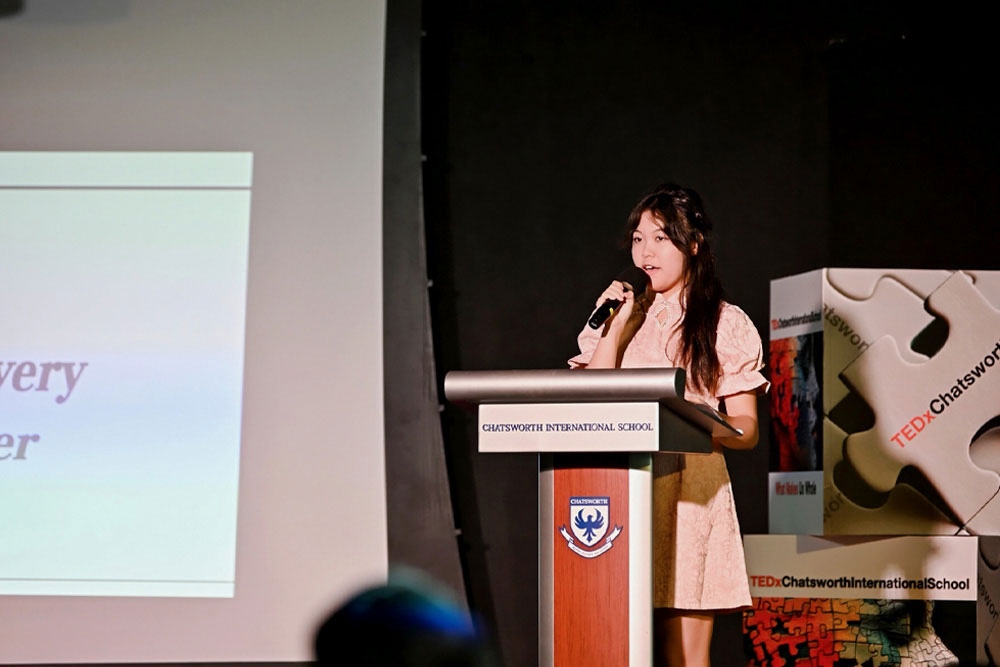
We witnessed this exact same psychological safety vibrating through our wider community during the TEDxChatsworth 2026 conference. Watching my DP 1 English B student, Emily, step onto that illuminated red carpet was a moment of immense personal and professional pride. Having taught Emily since she first joined Chatsworth as a Year 10 EAL student navigating a new academic environment, seeing her stand confidently under those lights to speak about identity, culture, and belonging was truly unforgettable. Emily spoke with remarkable sincerity, composure, and grace, reminding us all how deeply language and personal voice shape who we are.
Our campus Human Library event was the natural classroom evolution of that inspiring TEDx spirit. Originally created in Denmark in 2000 with the core premise to "Unjudge Someone", the global Human Library movement replaces traditional paperbacks with living human beings. Instead of checking out bound books from a shelf, our middle schoolers spent an afternoon borrowing real human beings for courageous, structured, and open-hearted conversations that challenged underlying stereotypes and assumptions.
Chapters Unlocked: Insights from the Shelves
Our seven courageous human books, comprising Chatsworth students, parents, and dedicated staff members, generously opened up their life chapters across our library, drama rooms, and quiet classrooms:
Maia Sherwood (Student) – The Hidden Struggles Behind Success
Maia courageously challenged the common misconception that high achievers move through life effortlessly without internal cost or personal battles. Sharing her personal medical journey alongside her deep love for performing arts, she reminded her listeners that physical or health challenges do not define an individual's true capabilities or future potential.
"No matter what comes your way, there is always another path waiting for you."
India & Khione Kasiman (Students) – Different Minds, Equal Opportunities
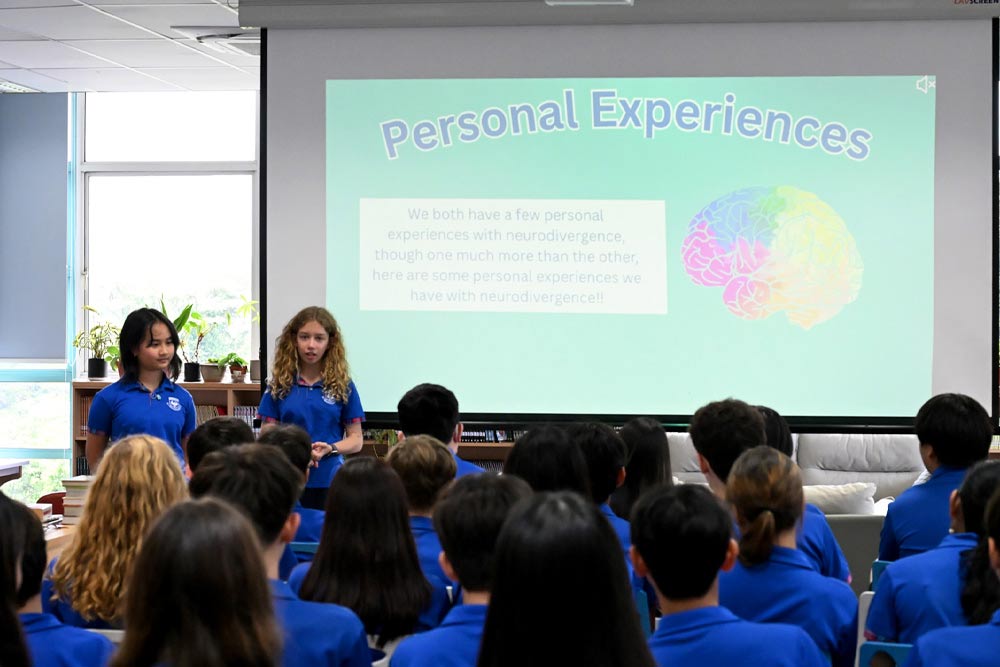
A deeply poignant look into neurodiversity, learning differences, and day-to-day resilience. Khione highlighted that with proper understanding and tailored support systems, neurodivergent individuals genuinely thrive, completely shattering the persistent myth that operating differently is a weakness or limitation.
"Everyone, regardless of how their brain works, should be fully included and treated as complex humans."
Vasanthi Thandlam (ELA Teacher) – Beyond the Traditional Family
Opening up about personal loss, emotional healing, and the process of redefining what family truly means across different life stages. Sharing a journey from feeling unseen to empowering others through sports coaching, expressive dance, and community service.
"Family may shape us, but resilience and courage help us rise. Your beginnings do not define your limits."
Rinashni (Secondary Teacher) – Body Image and Acceptance
A candid exploration of navigating the silent internal battle of body image in the modern social media era. Rinashni encouraged a complete paradigm shift toward self-love, self-compassion, and radiating empathy toward others who are quietly struggling.
"Embody love for your body exactly as it is, and always uplift those around you with kindness."
Dhaanashree Sharma (Parent) – Your Background Is Not Your Barrier
Reframing our internal narrative from asking "Do I belong here?" to asking "What value can I bring here?", proving through personal experience that our unique cultural and personal backgrounds form the bedrock of our strength.
"Your background is not your barrier—it is the foundation of your strength and purpose."
(Additional inspiring spotlights included Rob Newberry sharing his perspective on "The Superpower I Didn’t Understand" and Jake Eades reflecting on "Turning Challenges Into Strengths").
Voices from Our Community
The true measure of this event's impact was reflected in the immediate, heartwarming shifts in perspective shared by our readers, educators, and young participants following their sessions:
"Personal stories are inspiring, empowering, and so hard to tell… Thank you, Human Library!" — Ms. Liesl Pinto, Early Years Coordinator
"It’s not how you start, it’s how you RISE." — Mr. William Jerome Bell, I&S Teacher
"Don’t judge people if you don’t know their full story." — Chloe, Year 9 Student
"Block out the noise around you and listen to your own heart." — Year 8 Student Reflection
Walking the Talk
At Chatsworth International School, Diversity, Equity, Inclusion, and Justice (DEIJ) is not merely a policy statement written in a handbook; it is a lived, daily ethos. By embedding the Human Library directly into our middle school classrooms in 2026, we provided an intentional, structured space where students could actively practice emotional intelligence, active listening, and genuine empathy.
Behind every single face walking through our school hallways is a complex, beautiful, and valuable story waiting to be heard. We gathered around the table, we listened deeply without interrupting, and we allowed those human stories to change us for the better.
By unjudging the living books before us, our students discovered that the greatest antidote to prejudice is not silence or tolerance, but courageous curiosity. When we open a human book, we do not just read a story; we rewrite the way we see humanity.
_______________________
References and Credits
Chatsworth International School DEIJ Policy: Chatsworth DEIJ Policy Statement
The Human Library Organization: Background on the global movement and methodology available via humanlibrary.org
The Psychological Mechanism of Narrative Transportation: Green, M. C., & Brock, T. C. (2000). The Psychological Power of Storytelling: In the Mind of the Reader. Journal of Personality and Social Psychology, 79(5), 701–721.
The Neuroscience of Storytelling (Neural Coupling): Zak, P. J. (2015). Why Inspiring Stories Make Us React: The Neuroscience of Narrative. BMC / PubMed Central (PMC4445577).
Historical Storytelling & Oral Traditions: National Geographic Education Resource Library