A Deep Dive into the Reggio Emilia Approach
Every parent wants their child to love learning. What's less obvious is what kind of environment actually makes that possible. The Reggio Emilia approach, which originated in northern Italy after World War Two, is built on a simple but profound conviction: that children are naturally capable, curious, and full of things to say about the world around them. Understanding this approach gives parents a clearer lens for evaluating what early childhood education can look like at its most intentional, and what to look for when choosing a school that takes the early years seriously.
What is the Reggio Emilia Approach?
The Reggio Emilia approach is a philosophy of early childhood education that places the child's curiosity at the centre of the learning experience. Rather than following a fixed curriculum delivered by a teacher, children are encouraged to explore topics that genuinely interest them, express their understanding in a wide variety of ways, and build knowledge through investigation and collaboration.
What are the 5 Principles of the Reggio Emilia Approach?
The Reggio Emilia approach is held together by a set of core principles, each one reflecting a particular understanding of how children learn and what they need to thrive. Together, they form a coherent philosophy rather than a collection of techniques.
The Image of the Child: Curiosity is treated as the child's natural starting point, not something to be introduced. What an educator's job becomes, then, is not to ignite interest but to follow it, and to design an experience worthy of the child who is already there.
The Hundred Languages of Children: Children don't express their understanding only through words. They draw, build, move, sing, and imagine. The Reggio approach recognises these as legitimate and valuable forms of communication, giving children multiple ways to show what they know and how they see the world.
The Role of the Teacher: In a Reggio classroom, the teacher is not a deliverer of content but a co-investigator alongside the child. They observe carefully, ask questions rather than provide answers, and document what they see in order to understand where each child's learning is heading.
Reciprocal Relationships: Learning, in the Reggio model, happens in relationship. Between child and teacher, between children and their peers, and between the school and the families it serves. These relationships are not incidental to the education model; they’re part of its structure.
A Pedagogy of Listening: Listening, in Reggio, means more than hearing words. It means attending to how a child is thinking, what they’re drawn to, and what their behaviour and creations reveal about their inner world. It’s an active, ongoing practice rather than a passive one.
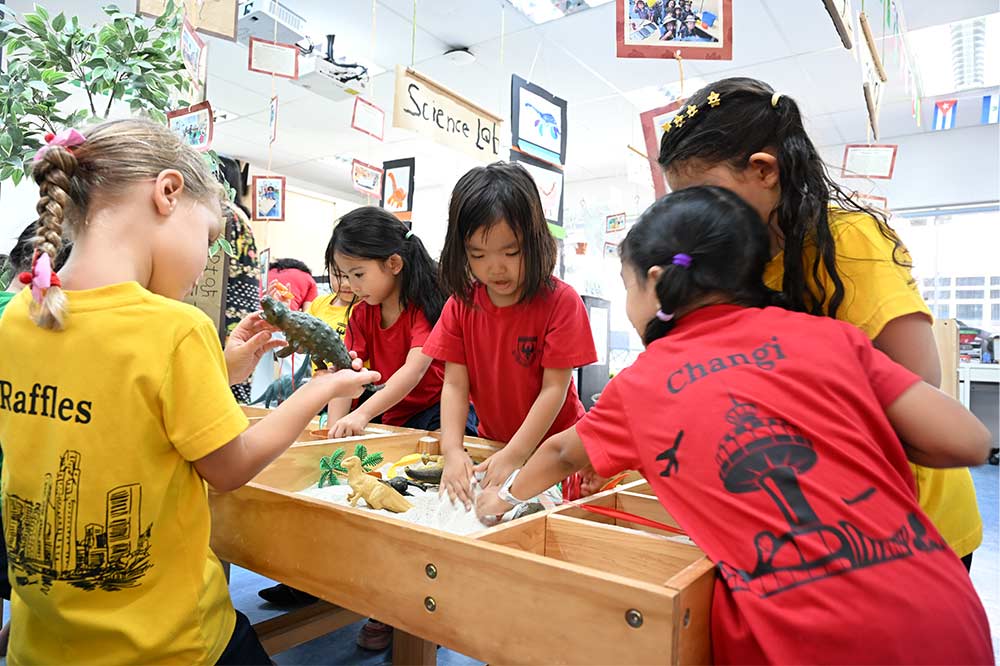
The Environment as Third Teacher: The physical space a child learns in is understood as a teacher in its own right. A well-designed environment invites curiosity, signals that the child's work is valued, and creates the conditions for discovery. In Reggio-inspired settings, the classroom itself communicates something to the child about who they’re and what they’re capable of.
Reggio Emilia vs International Baccalaureate: Different Roots, Shared Values
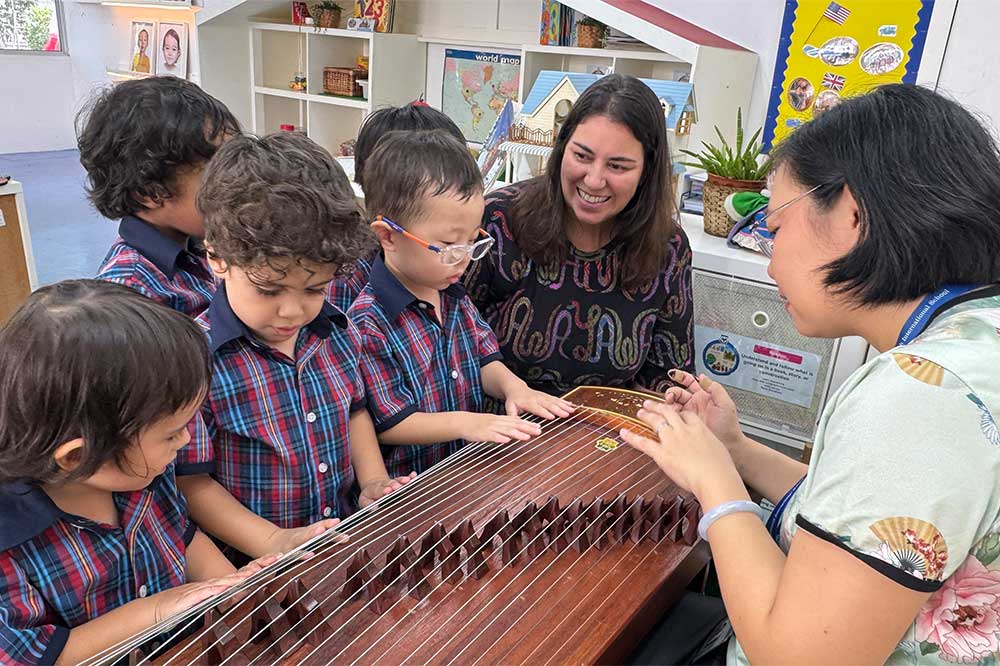
The Reggio Emilia approach and the International Baccalaureate are often discussed as alternatives. At Chatsworth International School, they're understood as something more interesting than that: as complementary frameworks that, when thoughtfully integrated, produce a richer early childhood experience than either could deliver alone. For parents evaluating an international school in Singapore, understanding where they differ and where they naturally align is a useful starting point. Here's how the two compare:
| Reggio Emilia | International Baccalaureate |
Origin | Reggio Emilia, Italy (post-WWII) | Geneva, Switzerland (1968) |
Age Range | Primarily early childhood (0 to 6) | Ages 3 to 19 |
Curriculum Structure | Emergent; no fixed syllabus | Structured with defined learning outcomes |
Teacher's Role | Co-investigator and observer | Facilitator within a defined framework |
Assessment | Documentation and observation | Ongoing and reflective; formal evaluation at senior levels |
Global Recognition | Respected philosophy; not formally accredited | Internationally-recognised university qualification |
Learning Style | Project-based, child-led, creative | Inquiry-based, interdisciplinary, concept-driven |
Parental Involvement | Structurally embedded | Encouraged but not required |
Where the two approaches differ is largely structural. What drives them is often the same. Reggio Emilia and the IB share a view of the child as naturally curious and capable, and both treat the teacher-student relationship as something that genuinely shapes what learning looks like in practice.
At Chatsworth, the kindergarten programme draws on Reggio principles with intention: the conviction that children are naturally curious and resourceful, the hundred languages through which they express their understanding, and the classroom environment as a teacher in its own right. These ideas are embedded within the IB Primary Years Programme framework, which gives them structure, continuity, and a clear path forward as students grow.
For parents seeking an IB preschool in Singapore where that foundation carries through to the Diploma years, it's an approach that offers the warmth and child-centredness of Reggio alongside the rigour and continuity of the IB.
Curiosity Doesn't Stop at Six
The most thoughtful early childhood programmes don't ask parents to choose between a philosophy and a framework. They bring the best of both into the same room. At Chatsworth, the Reggio-inspired conviction that every child arrives already curious sits alongside an IB structure designed to carry that curiosity forward, through primary school, through the middle years, and all the way to the Diploma. The question worth asking isn't which approach is right for your child. It's whether the school you're considering knows how to hold both together.
If you'd like to see what that looks like in practice, we'd love to welcome you. Book a school tour and come and experience the Chatsworth community for yourself.