Empowering Students Through Hands-On STEAM Education
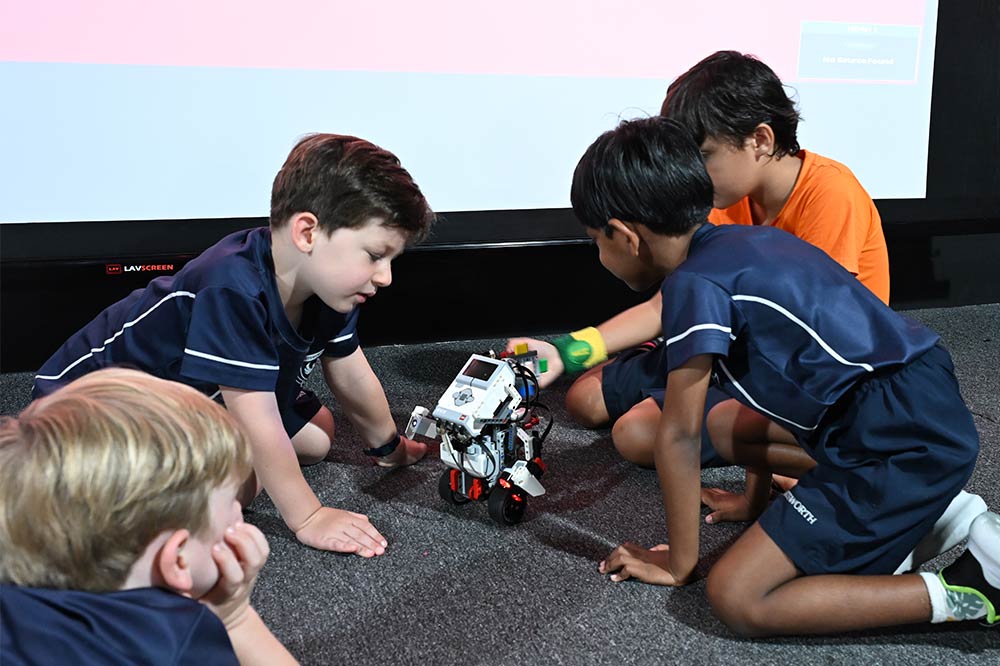
Most parents want their children to be good at science and maths. Fewer stop to ask what good actually means in a world where challenges don't arrive pre-sorted by subject.
STEAM education, which brings together science, technology, engineering, arts, and mathematics into a connected approach to learning, is built for that reality. It doesn't simply teach your child what to know. It shapes how they engage with problems they've never encountered before, and whether they have the confidence and creativity to work through them. For parents choosing an international school in Singapore, that distinction matters more than it might first appear.
What is the Concept of STEAM Education?
STEAM education is an approach to learning that brings together five disciplines, science, technology, engineering, arts, and mathematics, not as separate subjects to be studied in isolation, but as connected ways of understanding and solving real problems.
The premise is that the challenges your child will face in their lifetime rarely belong to one field alone. They require the analytical precision of a scientist, the structured reasoning of an engineer, and the creative instincts of an artist, often simultaneously. It's an approach that sits naturally within the IB curriculum in Singapore, which is built on the same conviction: that learning across disciplines, rather than within silos, produces students who are genuinely equipped for the complexity of the real world.
What is STEAM Education vs STEM Education?
STEM and STEAM share a great deal of common ground. The difference lies in one discipline and what that discipline brings to the others. Here's how the two approaches compare:
| STEM | STEAM | |
| Disciplines | Science, Technology, Engineering, Mathematics | Science, Technology, Engineering, Arts, Mathematics |
| Core focus | Technical precision and analytical thinking | Technical precision combined with creative reasoning |
| Problem-solving style | Logical, structured, formula-driven | Logical and structured, with room for creative interpretation |
| Role of creativity | Secondary to technical output | Central to both the process and the outcome |
| Community emphasis | Lower priority | High; ideas must be presented, not just solved |
| Skills developed | Critical thinking, technical proficiency | Critical thinking, technical proficiency, creativity, communication |
The A is STEAM: Importance of Design Thinking and Creativity in Learning
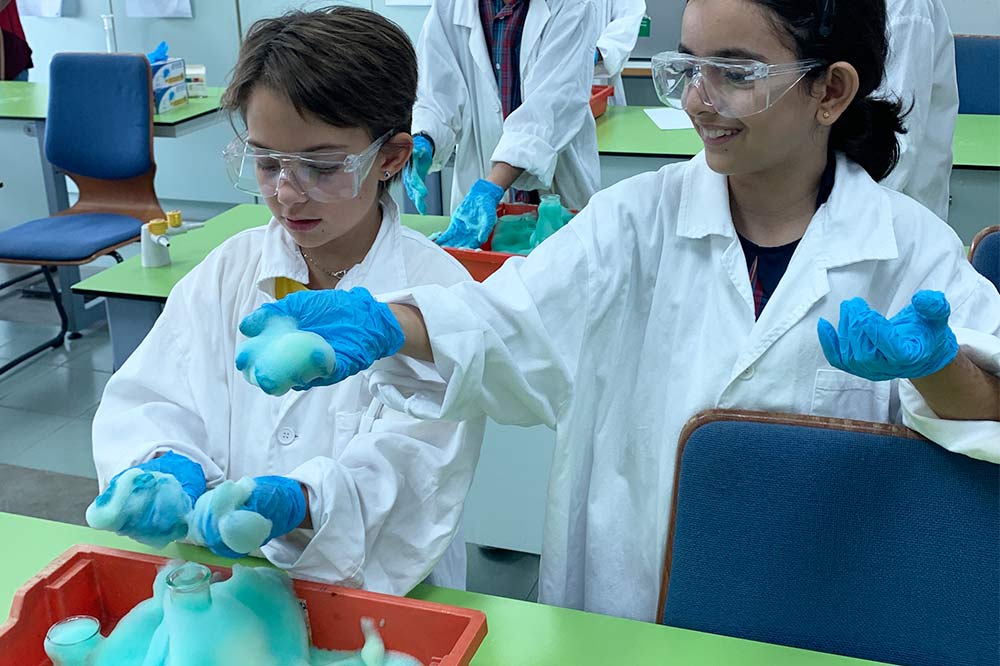
The arts in STEAM education aren't there to soften the harder disciplines. They're there because creativity is a core problem-solving competency, not a supplementary one. Design thinking, which sits at the intersection of art and engineering, asks students to approach challenges by considering the human experience first: who is this for, what do they need, and how can that need be met in a way that is both functional and thoughtful? When students learn to think this way, they don't just build solutions. They build solutions worth using.
Creativity also develops something that technical training alone rarely produces: the ability to communicate ideas with clarity and conviction. A student who can solve a problem but cannot explain it, present it, or make it legible to others will always be limited in what they can do with that solution. This is where the arts become practical rather than decorative. The thinking only travels as far as the communication carries it.
At Chatsworth International School, this integration is visible in some of the most meaningful moments of a student's early education. In the IB Primary Years Programme, Year 6 students undertake the PYP Exhibition: a culminating project where they identify a real-world issue they care about, investigate it with genuine depth, and present their findings to the wider school community. Students have explored topics ranging from animal welfare to waste management, weaving together research, design, and presentation into a single, self-directed body of work. The art is not incidental to the exercise. It’s how the thinking becomes visible, and how a student learns that an idea, however strong, is only as powerful as their ability to share it.
The Skills That Can't Be Automated
The jobs your child will do may not exist yet. The problems they’ll be asked to solve almost certainly don't. What remains constant, regardless of how the world changes, is the value of a person who can think across disciplines, approach the unfamiliar without freezing, and bring others along with them. STEAM education, at its best, doesn't prepare students for a career. It builds the kind of mind that can navigate whatever career turns out to be.