
Beyond the Book: Guided Reading with Purpose at Chatsworth

Guided Reading is a small-group teaching approach that helps students become confident, independent readers. In these sessions, teachers select books that match each child’s reading level and provide support as they practise key reading strategies. Students learn to read with understanding, accuracy, and expression, building the skills needed to tackle increasingly challenging texts over time.
Guided Reading in the PYP at Chatsworth
At Chatsworth International School, Guided Reading is a key part of our balanced language programme. Through focused, small-group instruction, it supports the development of confident, thoughtful, and independent readers. Teachers adapt their instruction to meet each learner’s needs, targeting skills such as decoding, fluency, vocabulary development, and comprehension.
While Guided Reading often connects to the Units of Inquiry, it also provides dedicated time for students to focus on their individual reading goals. This approach reflects the philosophy of the IB Primary Years Programme, supporting Approaches to Learning (ATL) skills such as communication, collaboration, critical thinking, and self-management. Within their groups, students actively construct meaning and reflect on their progress as readers.
What Does Guided Reading Look Like at Chatsworth?

Guided Reading is a flexible and intentional part of the daily literacy routine, designed to meet students at their point of need and develop confident, capable readers.
Students are grouped based on current learning needs, using data from Fountas & Pinnell (F&P) benchmarks, MAP assessments, and teacher observations. These groups are fluid and regularly adjusted to provide appropriate challenge and support.
Each session begins with a clear learning intention. Teachers may open with a brief discussion, introduce key vocabulary, or model a reading strategy. Students then read independently while the teacher listens in, providing prompts or guidance to enhance comprehension and fluency. After reading, the group reflects together to discuss the text and consolidate strategies.
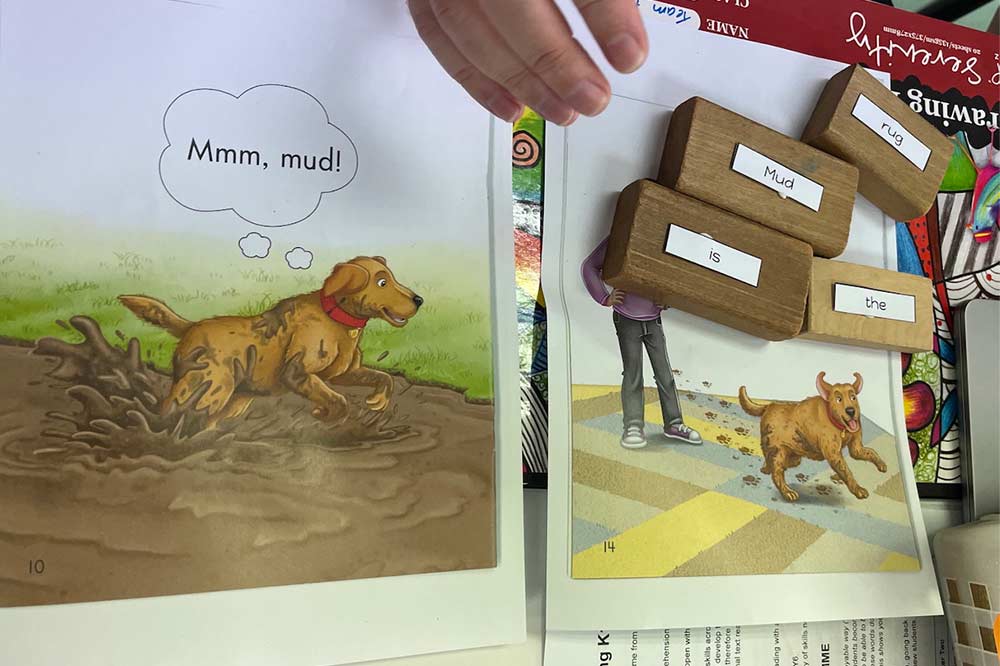
While the teacher works with one group, other students rotate through independent language stations including buddy reading, word work, writing tasks, digital reading, and research. Students choose how to engage with these activities, promoting agency and ownership of learning. These rotations build independence, increase reading stamina, and provide meaningful language practice in varied, engaging formats.
In Year 5, during the final two Units of Inquiry, students read the same novel across all Guided Reading groups to explore shared themes and deepen understanding. Though the text is the same, learning intentions differ by group to match reading levels and needs. Some groups focus on foundational skills like decoding and fluency, while others tackle advanced comprehension strategies such as analysing character development, author’s purpose, and thematic evaluation. This approach ensures meaningful connections with the text for all learners.
Guided Reading supports a wide range of reading skills. Decoding strategies include reading from left to right, using picture clues, recognising initial sounds, segmenting and blending, identifying sight words, chunking multisyllabic words, and applying strategies like skipping and rereading when needed.
Fluency is nurtured through expression, pacing, intonation, and attention to punctuation. Students practise adjusting tone and phrasing to reflect meaning and intent.
Comprehension is explicitly taught through predicting, visualising, summarising, making connections, inferring, clarifying, analysing, synthesising, and evaluating. These strategies help students think critically, engage deeply, and become reflective readers.
A Range of Texts to Support Language and Inquiry
While novels play a key role in Guided Reading in the upper years, a wide variety of texts support diverse literacy goals. These include nonfiction articles, biographies, poetry, digital texts, reports, and picture books. Exposure to different genres helps students understand various text structures, language styles, and author purposes.
Novels are carefully chosen to spark meaningful discussions around themes such as identity, perspective, conflict, and community. Some texts align with Units of Inquiry, while others broaden students’ literary experiences. Students explore character development, narrative techniques, and literary devices. They are encouraged to evaluate viewpoints, make interdisciplinary connections, and develop empathy through literature.
Incorporating diverse text types also strengthens skills like identifying main ideas, synthesising information, and analysing text features. This approach prepares students to engage thoughtfully with a broad range of texts.
Diversity, Equity, Inclusion, and Justice (DEIJ) in Reading
At Chatsworth, we are dedicated to ensuring the books our students read embody our core values and reflect the diversity of our international community. Our reading collections are regularly reviewed and updated to include a broad spectrum of voices, perspectives, and lived experiences. By continually expanding and refreshing our resources, we aim to ensure every student can see themselves and others represented in the stories they encounter.
Supporting EAL Learners and Differentiation
Guided Reading at Chatsworth is thoughtfully adapted to support students who speak English as an additional language. Vocabulary support, sentence scaffolds, and targeted guidance help all learners access and enjoy reading materials. Small-group settings allow for personalised instruction and immediate feedback, fostering both confidence and language development.
In Year 5, a new EAL student was inspired by a particular Guided Reading group. After asking his parents to purchase the same book, he came to school having practised it at home and requested to join the group. This illustrates how Guided Reading fosters student agency and supports language learners in developing fluency and comprehension alongside their peers.
The Role of Teaching Assistants
Teaching Assistants (TAs) play a vital role in Guided Reading success at Chatsworth. They support small groups, reinforce routines, guide students through literacy station activities, and listen to Guided Reading groups to provide targeted feedback. TAs work closely with EAL learners and those needing additional support, helping create a calm, consistent environment that fosters focused and effective literacy learning.

Conclusion
Reading is more than a skill; it is a journey of discovery, connection, and growth. At Chatsworth, our approach to Guided Reading reflects this belief. Through thoughtfully selected texts and responsive teaching, we support students in becoming confident, curious readers who think critically and engage meaningfully with the world around them. By tailoring support to each learner, we foster essential skills such as communication, inquiry, and reflection, preparing students to succeed both in school and beyond.
This approach aligns with the IB Learner Profile and helps students become knowledgeable, open minded, principled, and reflective. They are encouraged to explore multiple perspectives, make meaningful connections, and consider how texts relate to their own experiences and the world around them.
As students grow through these reading experiences, they not only strengthen their literacy skills but also develop independence, resilience, and a lifelong love of reading. Guided Reading supports their academic success while nurturing compassionate, globally aware learners who are ready to lead with curiosity and purpose.

_______________________
References
Fountas, Irene C., and Gay Su Pinnell. Guided Reading: Good First Teaching for All Children. Heinemann, 1996.
International Baccalaureate Organization. PYP: From Principles into Practice. International Baccalaureate Organization, 2018. Available at https://www.ibo.org/programmes/primary-years-programme/.
National Reading Panel. Teaching Children to Read: An Evidence-Based Assessment of the Scientific Research Literature on Reading and Its Implications for Reading Instruction. National Institute of Child Health and Human Development, 2000.